
Off Track
Missed starts and at least two wandering roads

“Just Think”
About three years ago, I imagined I had developed a strong proposal for a non-fiction book of narrative history. About a 19th century bartender and political assassin turned operative who escaped twice from the police under illegitimate circumstances and was tried in the same year, under two different names, for murder and voter suppression. What seemed to me a thrilling way to reflect on America’s long history of blinding partisanship and media polarization. I called it “Ghosts In the Machine.”
The timing was ideal. I had been accepted into a monthlong artist residency in Mexico, Arquetopia, and planned to make considerable progress on the manuscript there. I gathered the stacks of books I would need and the thick file folder of research and stuffed everything into a backpack.
Even more encouraging, from my perspective: an agent was enthusiastic about the project and promised to give me a final word before I was to leave. But when she finally called, at 5 p.m. Friday before my Sunday morning departure, I knew right away it was bad news. She recommended I go to the residency and don’t try to do anything. “Just think.”
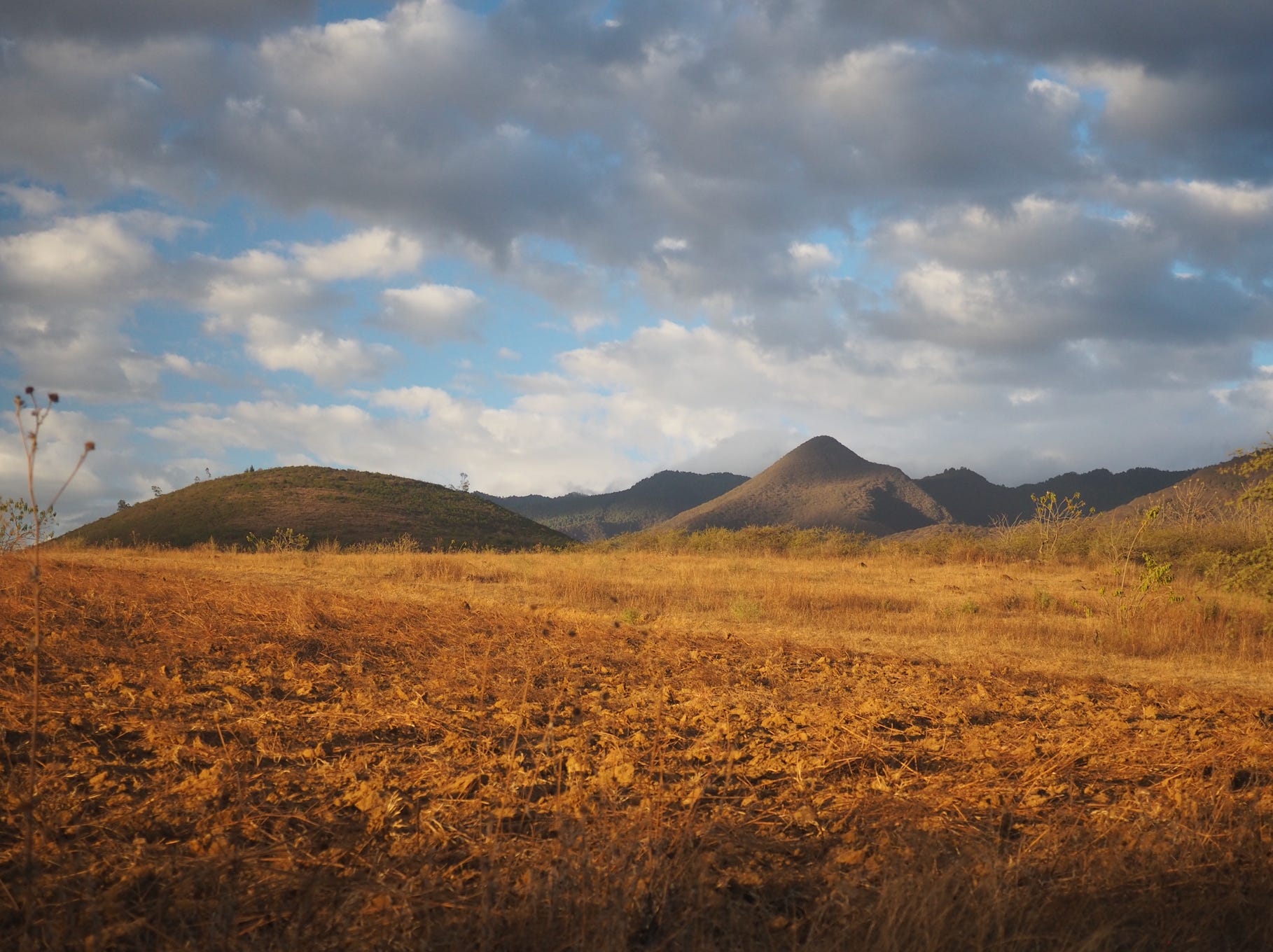
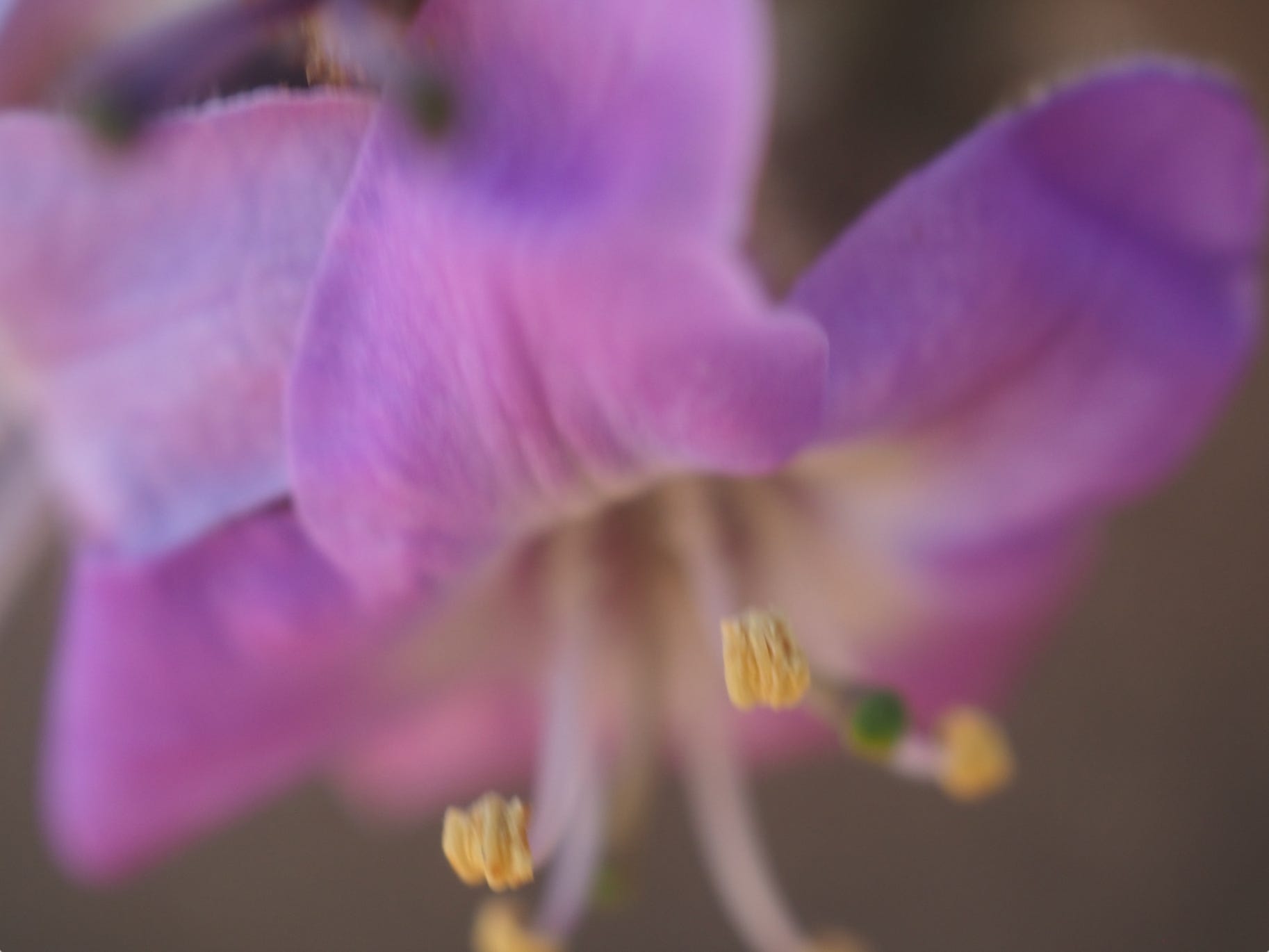
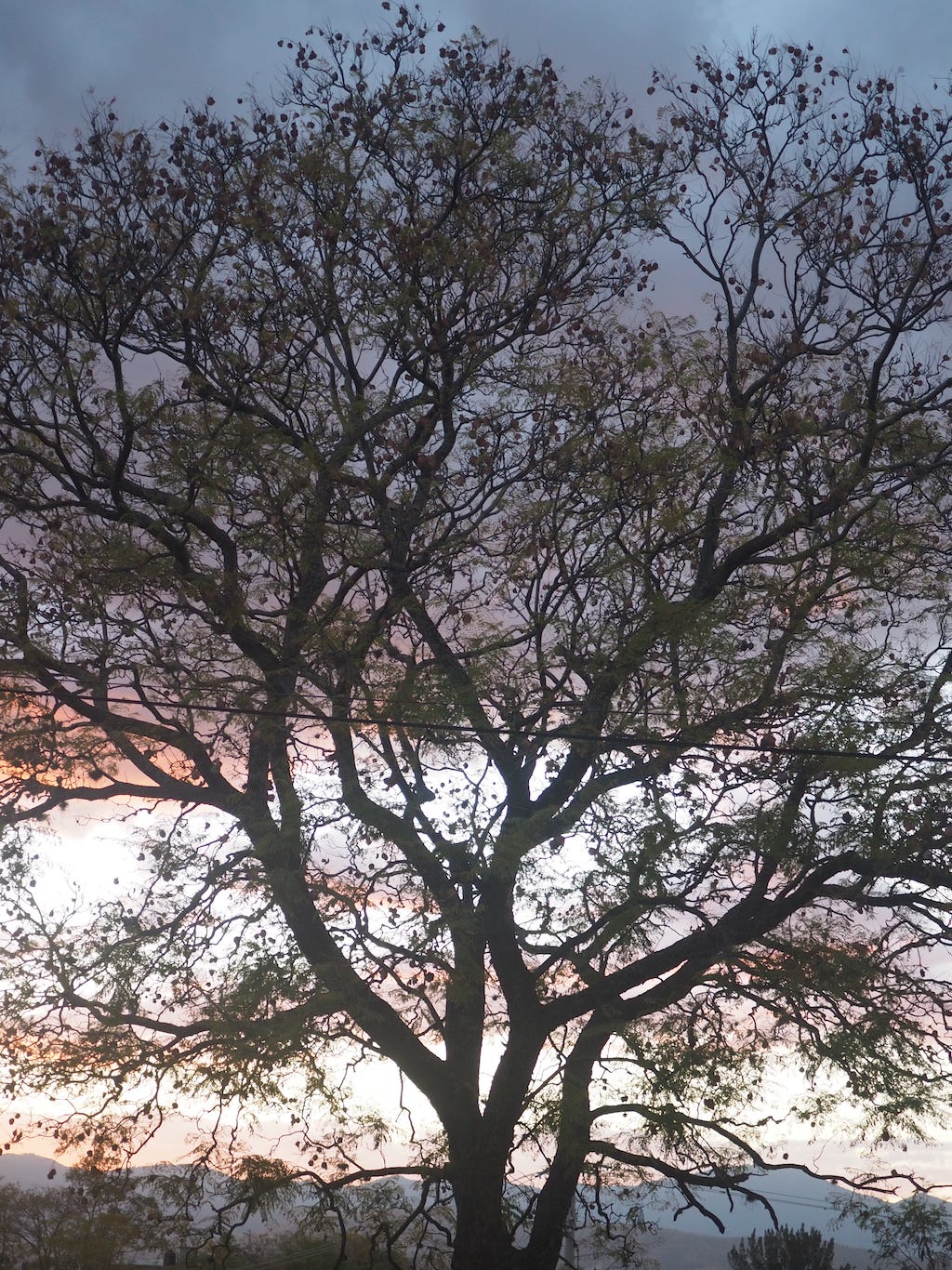
Arquetopia is in San Pablo Etla, a municipality about an hour by bus from Oaxaca. It stretches into the Southern Sierras. Most days I took long walks out the front gate and up the road to the tiny zocalo and then along dusty fields of yucca and cactus, the occasional low house, a man digging a hole for a tree. I would cross onto the dirt road, the acacia trees filmed with dust, aiming my macro lens at the yellow elders, the primavera, mesquite, the flor de mayo, the explosions of pink trumpet flowers. I read academic tracts interpreting the work of the philosopher Emmanuel Levinas, the Hungarian Jew who lost his entire family during the Holocaust. For Levinas, ethics begins with the moment of seeing “the other,” that is someone outside your world, and recognizing their distinct and particular humanity. An encounter so powerful that it produces a sense of responsibility to that other person—to respect them, to honor them, at the very least not to eliminate them.
In Oaxaca, along with my co-residents, I went to a gallery opening for a group of artists addressing the erasure of their city by gentrification and, in Teotitlan del Valle, famous for using natural dyes for making textiles and carpets, I bought myself a sublime pink and brown scarf. I took notes, pages and pages of diagrams and schematics for books about ideas. One was called “The Age of Loss,” another “The Last Days of Poe.” Maybe time to think means getting far off track.
Back home, I recall precisely the moment I passed the antique store on our block and thought to myself, “what if you never come up with another idea?” And the moment, in early March 2023, barely two weeks later, when one came to me fully formed. A novel that would take the reader inside a community rupturing over politics, its members increasingly incapable of seeing, or hearing, one another, let alone the other. And by the end of June, a satisfactory draft was in hand, along with the makings of a tragic character, Rabbi Adinah. Nothing had come easier.
Then the horrors of October 7 and the catastrophe of Gaza followed and the baseline reality of the world of the novel had all of a sudden changed. A novel that wrestled with Jewish feelings about Israel before October 7 was out of date and new realities (and contra-realities) were in the process of forming. Still are. In such a way I felt I couldn’t render them authentically on the page. I feared that real people would turn into cartoons. There was only one choice if I wanted to give dear Rabbi Adinah a chance at literary survival, as certain astute readers helped me see: place the characters in a pre-October 7 world but one that the reader explicitly knows is about to change. The final version of the novel, the one that will be published May 5, follows the rabbi starting early morning of September 3, 2023; each chapter brings her and her Jewish and non-Jewish communities closer to something horrible whose consequences the reader knows but the characters don’t. The novel is called “Partly Strong, Partly Broken.”
The Search for Dog
While struggling with my own work, New Door Books gave me the opportunity to edit someone else’s novel, The Blue Door, by Janice Deal. Now, the novel has been named one of LitHub’s 100 notable small press books of 2025. What a joy for an editor to read, “Well crafted and paced, this is a beautifully told story of loss and escape.” Jan’s prose cuts like a very sharp knife, while with remarkable skill taking the reader deeper into the heart of things. The Blue Door is a wandering road all by itself. Read it alongside Ariana Harwicz’s Unfit (translated from the Spanish by Jessie Mende Sayer). Two compact, bracing meditations on motherhood.
Maybe literature serves, in Emmanuel Levinas’s construct, as a voice of “the other.”
See you around!
Nathaniel
All photos taken by me in San Pablo Etla, Mexico.
Vividly written, I followed your footsteps.